A drowning victim has minutes — sometimes seconds — before brain damage begins. This is how trained responders approach the water, extract the casualty safely, and deliver the first aid that decides the outcome.
Approach the Water Before You Approach the Victim
Most drownings that end badly involve a second victim — the rescuer. A panicking casualty has the strength to push a swimmer underwater without intending to. Before anything else, a trained responder runs through the reach, throw, row, go ladder, in that order:
- Reach with a pole, paddle, towel, or pool hook from solid ground
- Throw a buoyant object on a line — a rescue tube, fender, or even a cooler
- Row out in a boat, paddleboard or kayak if available
- Go — enter the water — only as a last resort, and only with a flotation device
This sequence is not a preference. It is what separates one casualty from two. Every SGS lifeguard and security officer assigned to a waterfront property rehearses it weekly.
Extract Cleanly — and Keep the Airway Clear
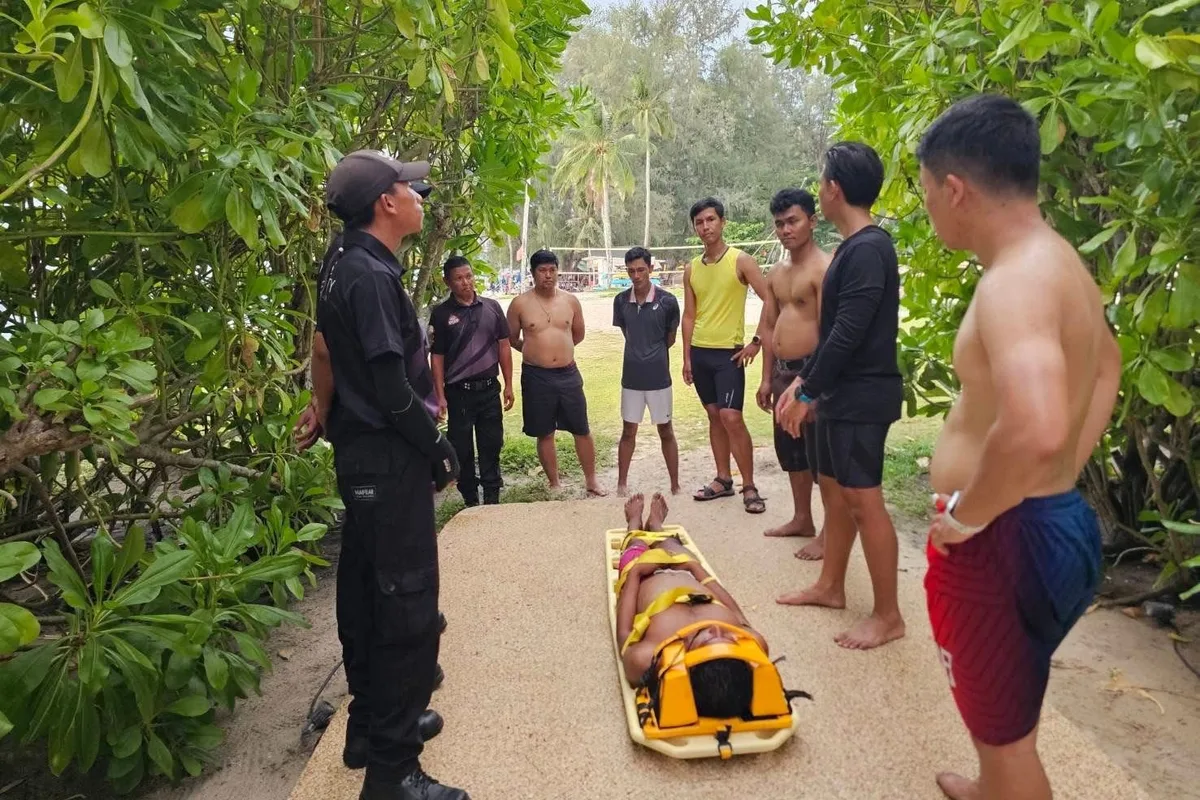
Once the victim is reached, the priority is not speed. It is airway position. The casualty’s face must be kept clear of the water at all times during the tow back, even if that slows you down. A spinal injury is possible if the incident involved a fall, a board strike, or shallow-water impact — in those cases the responder stabilises the head and uses a board or stretcher to extract, not a freestyle drag.
On land, the casualty is laid flat on a firm surface — sand, deck, or stretcher — with the head in a neutral position. Wet clothing is opened at the chest. The airway is checked: tilt the head, lift the chin, look and listen for breathing for no more than ten seconds.
CPR for a Drowning Casualty — Different from Cardiac Arrest
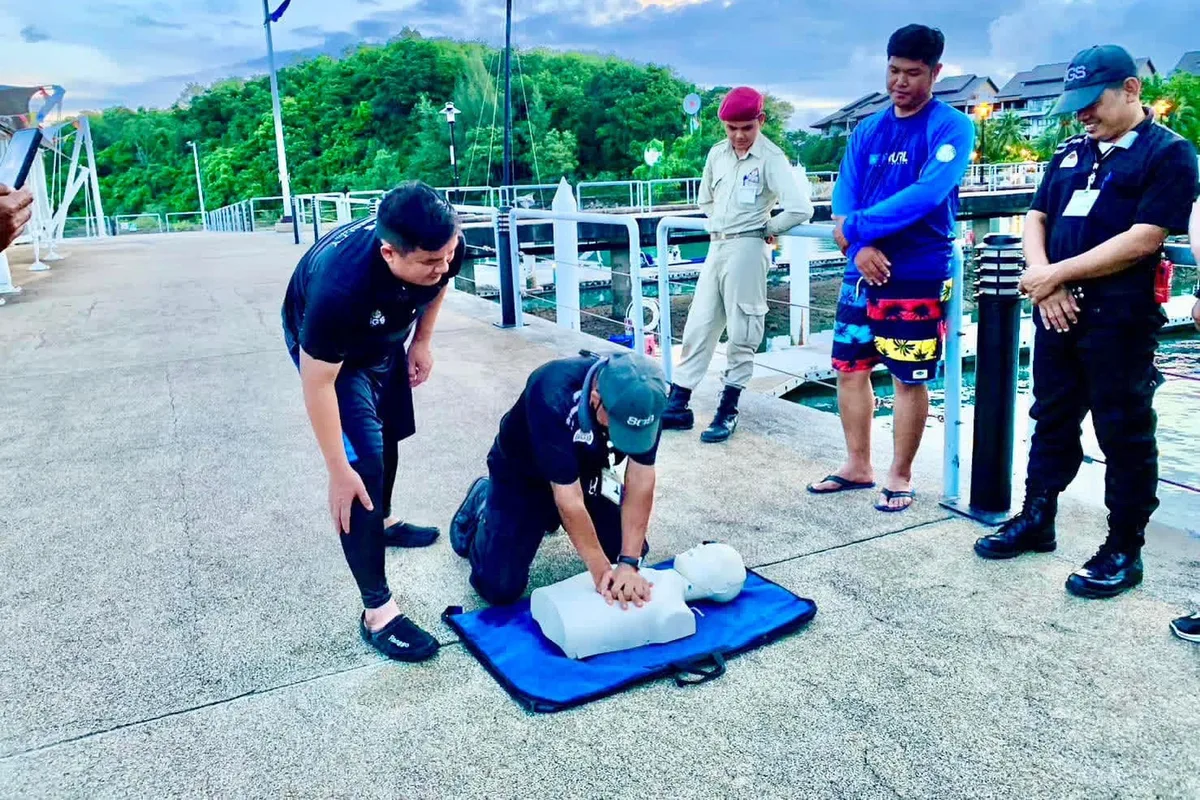
Standard adult CPR starts with chest compressions. Drowning is the exception. A drowning casualty’s heart usually stopped because of oxygen starvation, not a cardiac event — so the rescue starts with five rescue breaths first, then 30 compressions, then continues 30:2 until help arrives or the casualty breathes. This oxygen-first sequence reflects WHO drowning-response guidance (who.int), which treats drowning as a respiratory emergency rather than a cardiac one.
- Tilt head, lift chin, pinch nose closed
- Cover the casualty’s mouth and give five slow breaths — watch the chest rise
- 30 compressions in the centre of the chest, 5–6 cm deep, 100–120 per minute
- 2 breaths, then 30 compressions — repeat
- Do not stop for vomit beyond a quick log-roll to clear the mouth — drowning casualties almost always regurgitate water and stomach contents
Call 1669 — Thailand’s national emergency medical service, run by NIEMS (niems.go.th) — the moment you have hands free, or instruct a bystander to call by pointing at them directly: “You — call 1669, then come back to me.”
After Breathing Returns — Recovery Is Not the End
A casualty who coughs, vomits, and resumes breathing is not safe yet. Secondary drowning can develop hours later from water remaining in the lungs. Every recovered drowning casualty needs hospital observation for at least six hours, even if they appear fully recovered.
Place them in the recovery position on their side, keep them warm — hypothermia is common even in tropical water — and monitor breathing continuously until paramedics take over.
What Every Phuket Property Should Have on Hand
- A rescue tube or throw bag at every poolside and beachfront station
- A spine board or rigid stretcher within 90 seconds of any water hazard
- An AED (automated external defibrillator) — drowning can trigger arrhythmia even after breathing returns
- A clearly posted emergency number card with 1669 (EMS) and 1196 (Marine Police)
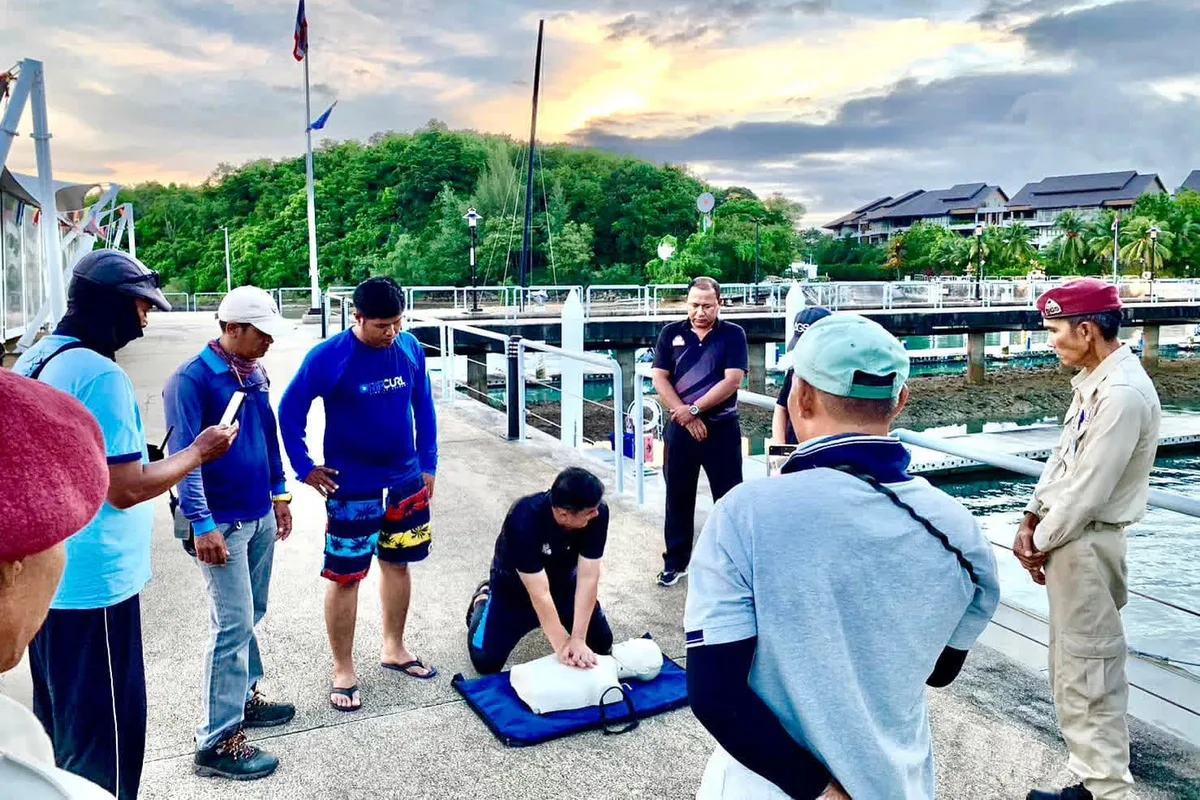
- Staff trained and re-certified annually — drowning skills decay fast without practice
The Phuket Numbers You Need
- 1669 — Thailand Emergency Medical Services (ambulance)
- 1196 — Marine Police (sea rescue)
- 1155 — Tourist Police (English-speaking)
- 191 — General police
Is your resort, villa or pool ready for the worst moment? SGS provides certified water-safety training, lifeguard deployment and on-site emergency drills across Phuket and Southern Thailand. Contact SGS to arrange a security audit in Phuket.