A guard standing at a hotel entrance and a team running security for a 5,000-runner marathon are doing fundamentally different jobs — and treating them as the same is how events end up under-protected. Event security in Phuket is a planned, temporary, crowd-focused operation built around one specific gathering. A regular guard provides steady, ongoing protection of a fixed place. Both matter, but they call for different skills, different planning and very different numbers — which is why an event in Phuket needs a dedicated security plan rather than a guard borrowed from a nearby building.
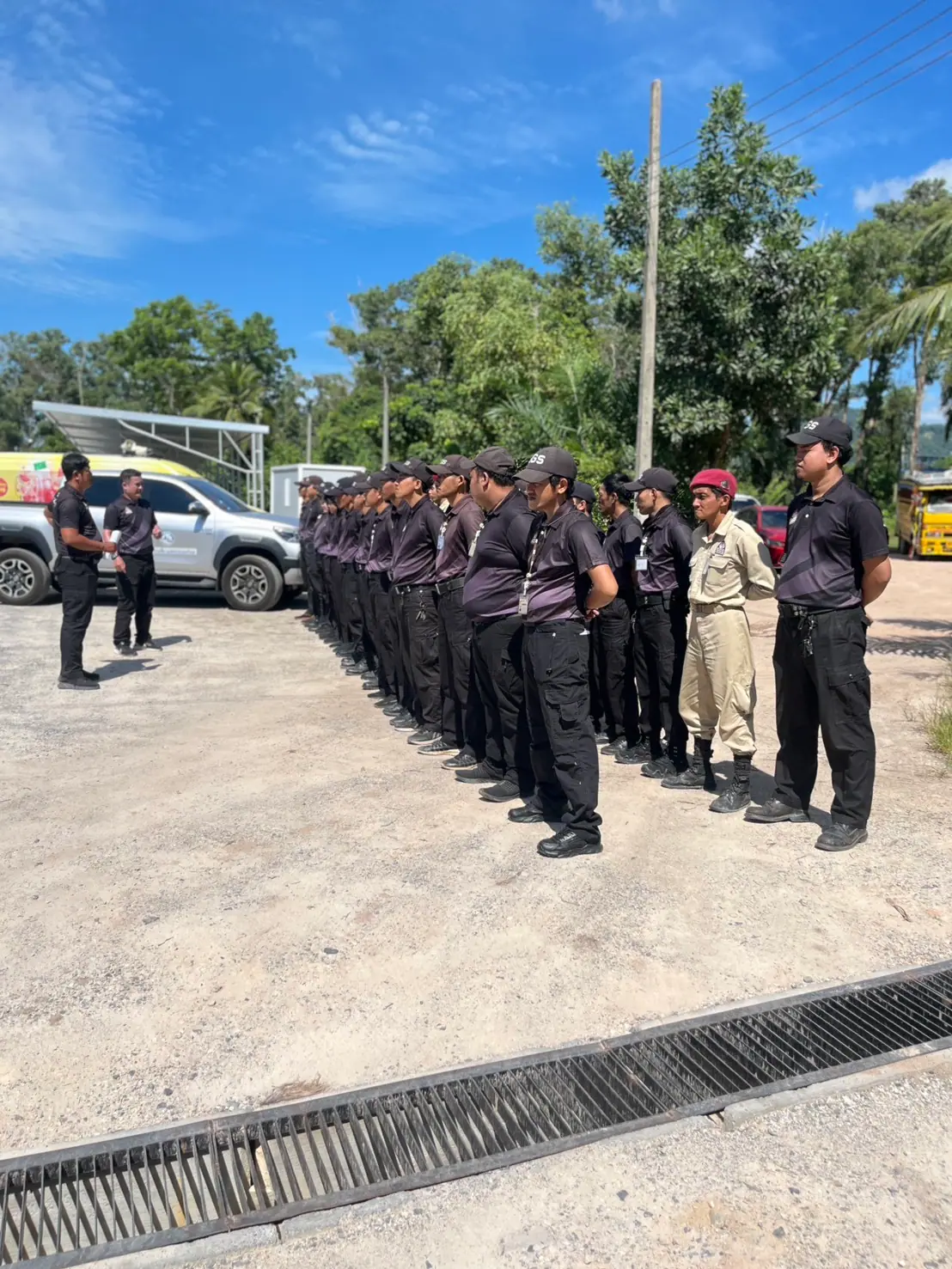
What “event security” actually means
Event security is the discipline of keeping people safe at a temporary gathering — a concert, marathon, expo, product launch, festival or private function. Across Phuket that covers everything from a beachfront wedding to a stadium race or a hotel gala. It exists only for the life of the event, scales up to match the crowd, and is built on a plan written long before anyone arrives: expected attendance, crowd flow, entry and exit points, capacity limits, emergency egress routes, weather, and the specific risks of that venue and audience.
The shape of the work is what sets it apart. It compresses into three phases — set-up, a high-pressure peak when thousands arrive at once, and teardown — often running from before dawn until late at night. Nothing about it is routine, because the venue, the crowd and the threats change with every event.
What a regular security guard does
A regular guard — what the industry calls static guarding — protects a fixed asset on an ongoing basis: a hotel, villa, office, construction site or gated community. The value here is consistency. The same post is covered day after day, the officer learns the site and its normal rhythm, and the core tasks are deterrence, access control at one or two points, patrols and incident reporting.
A static guard is measured by reliability over months. An event security operation is measured by how flawlessly it handles a single, unrepeatable day. That difference drives everything else.
Five differences that matter
- Planning vs routine. Event security begins with a risk assessment and a written operations plan; a guard works an already-established post with a standing routine.
- Crowd management. Events deal with crowd dynamics — surges, bottlenecks, the risk of a crush — that a single-site guard almost never faces. Reading and steering a crowd safely is a specialist skill, not a default one.
- Scale and command. An event runs dozens of officers under a briefed command structure, with radios, defined zones, and live liaison with police and medical teams. A guard post is usually one or two people.
- Time profile. A guard post is steady and predictable. Event security explodes into setup, an intense peak, and breakdown — long shifts under pressure, frequently overnight.
- Access and accreditation. Events control entry by wristband, ticket, pass and zone — general, VIP, backstage, runner-only — not just a single locked door.
Traffic, access and emergencies
Large events pull in responsibilities a building guard rarely touches. Routes on public roads need traffic management and coordination with officials so vehicles and crowds stay separated. Registration points — race-pack collection, priority check-in, accreditation desks — need controlled access so only the right people reach restricted areas. VIP zones need discreet protection and screening. And because thousands of people are concentrated in one place, the plan has to include medical coordination and a workable evacuation route before the gates ever open.
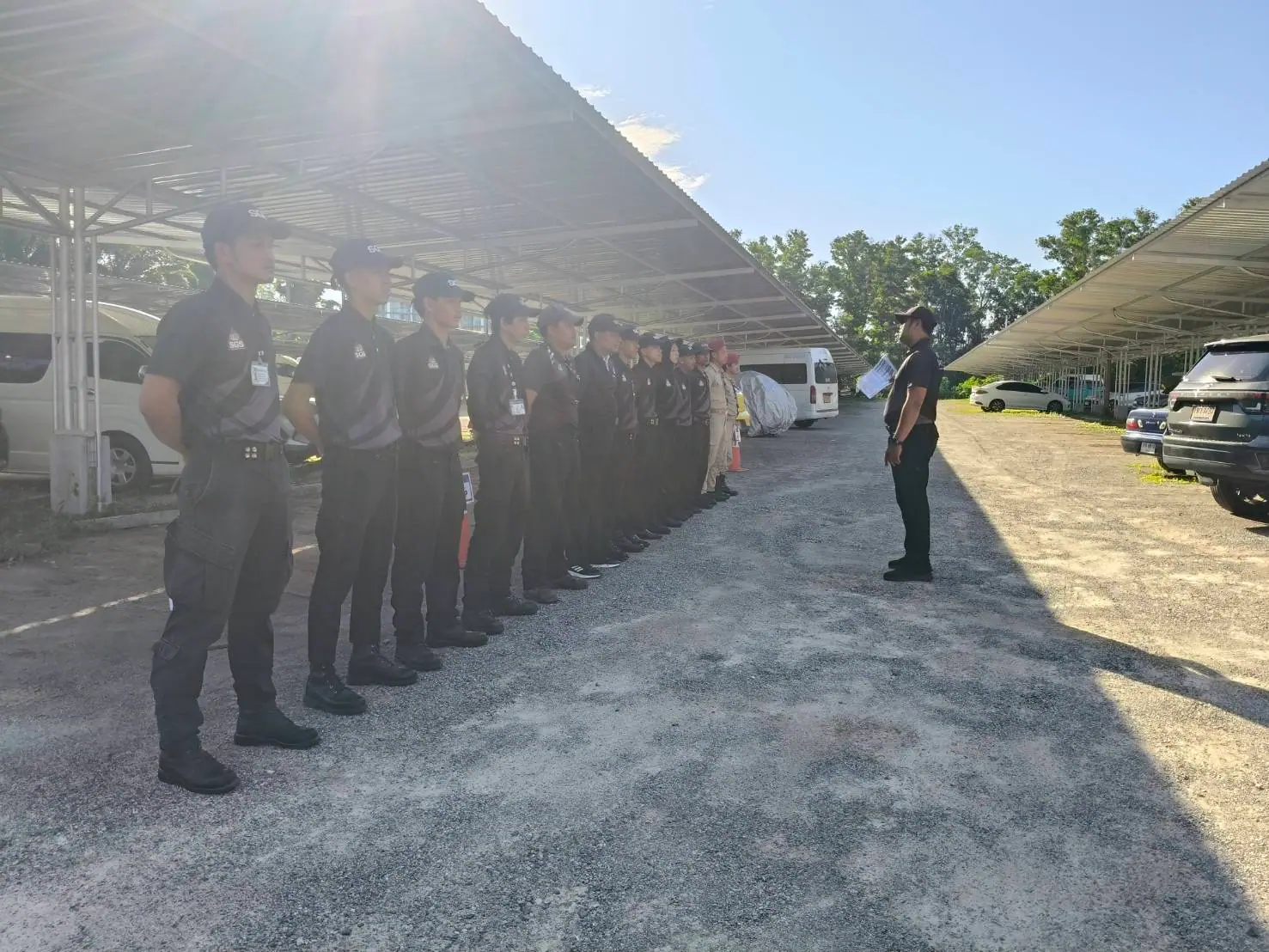
You can see all of this in practice in our Laguna Phuket Marathon 2026 deployment, where SGS handled crowd control at the start and finish, traffic on the coastal road, access control, and the VIP zone — from before dawn to nightfall.
When your Phuket event needs event security
If you are gathering more than a few dozen people in one place at one time — especially where there’s alcohol, cash handling, ticketing, public roads or VIP guests — you need event security, not a couple of guards borrowed from a nearby building. As a rule, the bigger the crowd and the tighter the schedule, the earlier the planning has to start. The plan is the product; the officers on the day are how it gets executed.
What SGS does
SGS plans and delivers event security across Phuket — manpower, crowd control, traffic management, access control, VIP protection and emergency response, coordinated with organisers and local authorities. For incidents that escalate, our team is trained to the same standard described in our guide to responding to a criminal emergency. The goal is simple: a plan thorough enough that, on the day, almost nothing is left to chance.
- 191 — Police (emergency)
- 1155 — Tourist Police (English-speaking)
- 1669 — Emergency Medical Services
- +66 (0) 76 336 084 — SGS 24/7 operations line