Most people hiring security in Phuket compare companies on price — when the questions that actually predict whether a guard shows up trained, licensed and supervised are never asked at all. Thailand regulates the security industry under the Security Guard Business Act B.E. 2558 (2015), yet unlicensed operators still quote for villas, hotels and events across the island every week. The seven questions below take about twenty minutes to ask, and they separate a professional security operation from a labour broker in a uniform before you sign anything.
Why the choice matters more in Phuket than most places
Phuket concentrates high-value property, seasonal crowds and a transient workforce on one island. That mix rewards corner-cutting: a company can hire cheaply, skip training and still look presentable at a hotel entrance — right up until the night something happens. The difference between a licensed, supervised officer and an unlicensed stand-in is invisible on a quiet day and decisive during an incident. The Security Guard Business Act exists precisely because of that gap, and it gives you, the buyer, a paper trail you can check.
Question 1 — Are you licensed under the Security Guard Business Act B.E. 2558?
Every legitimate security company in Thailand holds an operating licence issued through the Royal Thai Police registrar, valid for four years and renewable. Ask to see the licence document itself, not a logo on a brochure, and check that the company is a Thai-registered entity operating under a registered security-company name. A firm that hesitates, changes the subject or offers “we work with a licensed partner” is telling you everything you need to know.
Question 2 — Are your guards individually licensed, and where were they trained?
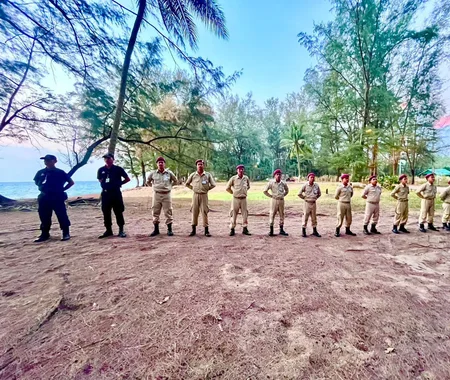
The Act licenses guards as well as companies. An individual guard licence requires Thai nationality, a minimum age of 18, a criminal background check through police databases and completion of certified training at an approved centre — and it expires after three years. Ask what percentage of the guards who would work your site hold current licences, and where they trained. Companies that run their own training school, as SGS does with its in-house training programme, control quality at the source instead of inheriting whatever the labour market delivers.
Question 3 — How long have you operated in Phuket, and who can vouch for you?
Security is local knowledge: which roads flood, how the island’s event calendar moves crowds, which police station covers your soi, how resort back-of-house actually runs. Ask for the founding year, then ask for references from clients whose property resembles yours — a villa owner should hear from villa clients, a GM from hotels. Ask also to see recent work. A company doing serious work can point to it publicly, the way our Laguna Phuket Marathon 2026 deployment documents crowd, traffic and VIP operations end to end.
Question 4 — What insurance stands behind your guards?
If a guard is injured on your property, or a third party is harmed during an incident a guard handled, whose policy responds? A professional company carries liability cover for its operations and legal employment cover — social security and workplace injury protection — for every officer. Ask for the insurer’s name and the coverage limits in writing. This question also quietly verifies question one: insurers do not underwrite unlicensed security operations, and a claim involving unlicensed personnel is a claim your own insurer may dispute.
Question 5 — Who supervises the guards, and what happens when one doesn’t show up?
A guard standing a post is the visible ten percent of a security operation. The rest is supervision and backup: roving supervisors who check posts through the night, a 24/7 operations centre that answers when your guard doesn’t, and a bench of trained officers to cover sickness and leave without sending you a stranger who has never seen your site. Ask how often supervisors visit, how a no-show is covered, and what the company’s guard turnover looks like. Turnover is the tell — companies that underpay and overwork guards replace them constantly, and every replacement resets your site knowledge to zero.
Question 6 — What exactly will be in writing?
Professional security produces paperwork before it produces guards: a site survey, a written post order describing exactly what each officer does hour by hour, daily occurrence reports, an incident-reporting format you can actually read, and clear terms for changing scope or exiting the contract. Ask to see a sample post order and a sample incident report before you sign. If the “contract” is one page of manpower and a price, you are hiring bodies, not a guarding service — and you will discover the difference at the worst possible moment.
Question 7 — How is your price built?
A legitimate monthly rate has to cover a legal wage, social security, insurance, uniforms and equipment, training, supervision and a margin. That arithmetic has a floor. When one quote comes in dramatically below the others, the missing money always comes from the same places: the guard’s wage, the guard’s training or the supervision layer — the three things you are actually buying. Ask every bidder to itemise the rate. The company with the transparent breakdown is rarely the cheapest and almost always the better purchase.
Red flags that should end the conversation
- No operating licence produced on request, or a “partner company” holds it
- Guards cannot show individual licences or a training record
- No named insurer or coverage limits in writing
- A price dramatically below every other quote, with no itemised breakdown
- No sample post order, occurrence report or incident report to show
- No physical operations centre or supervisor structure — just a phone number
- Passport-style pressure to sign today for a “special rate”
Why properties across Phuket choose SGS
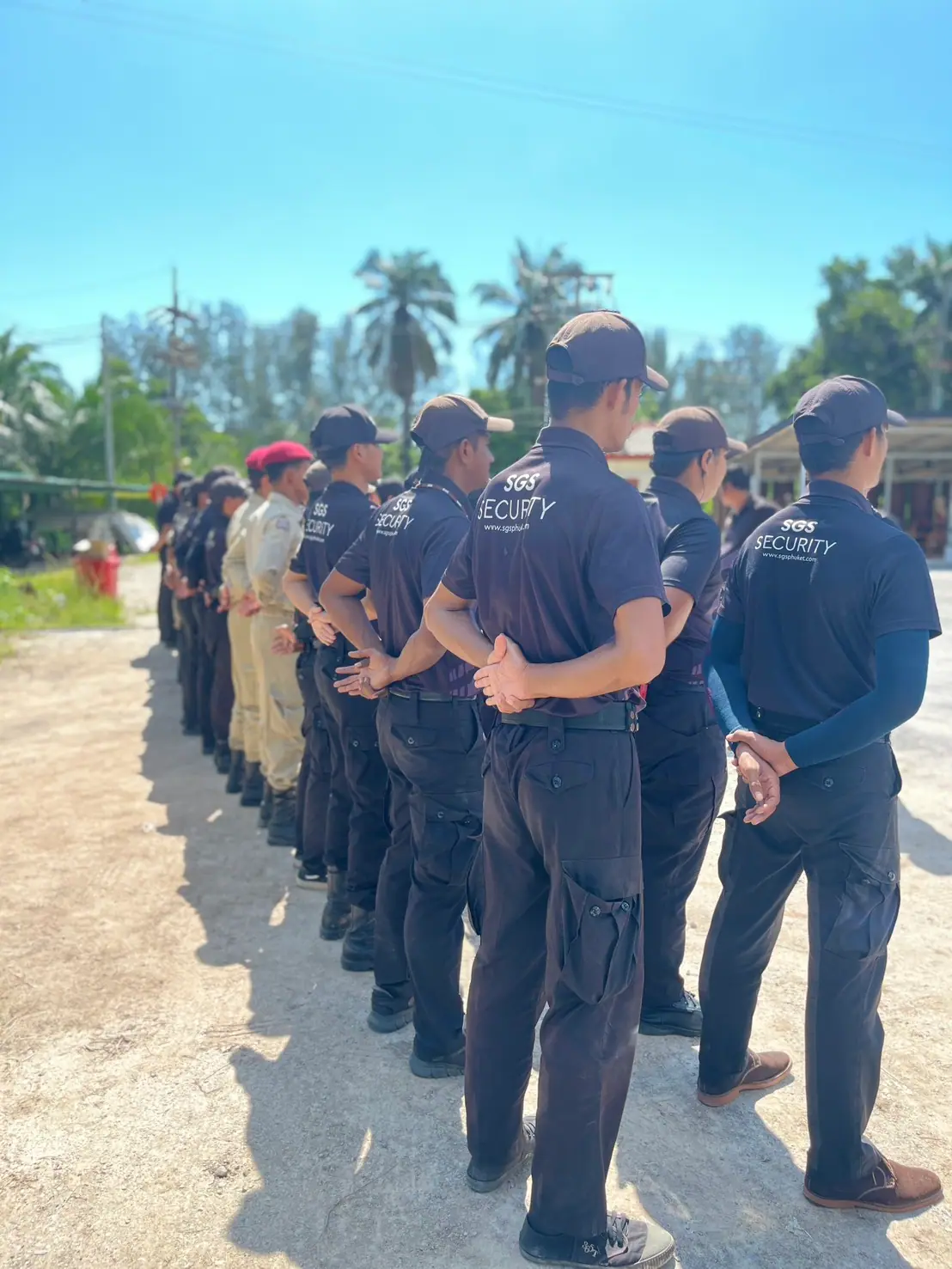
SGS has provided security services in Phuket since 2007 — built from the start as a permanent, in-house security operation, not a labour broker. Against the seven questions above: we hold the operating licence and every deployed officer is individually licensed; we run our own training school, so every guard completes the 40-hour licensing course plus documented refreshers before their first shift; more than 300 officers protect 40+ properties across Phuket, Khao Lak, Phang Nga and Krabi; every officer is police-vetted, drug-screened every two months and sits a monthly English exam; guards receive medical coverage, subsidised accommodation and above-market pay — which is why our people stay, and why your site keeps its institutional memory; and every engagement starts with a senior consultant’s security audit and site survey and ends in writing — post orders for static guarding, threat assessments for close protection, pre-event plans for event security, all backed by a 24/7 operations centre.
Ask us the seven questions. We enjoy answering them.
- +66 (0) 76 336 084 — SGS 24/7 operations line
- Request a free site assessment — a senior member of our team responds within one business day