On-site security guard training at InterContinental Phuket and The Title Legendary Bangtao
A licence course teaches the law. It cannot teach a hotel’s loading bay or a new development’s gate. That is learned on site, in uniform, before the first shift — and rehearsed after it.
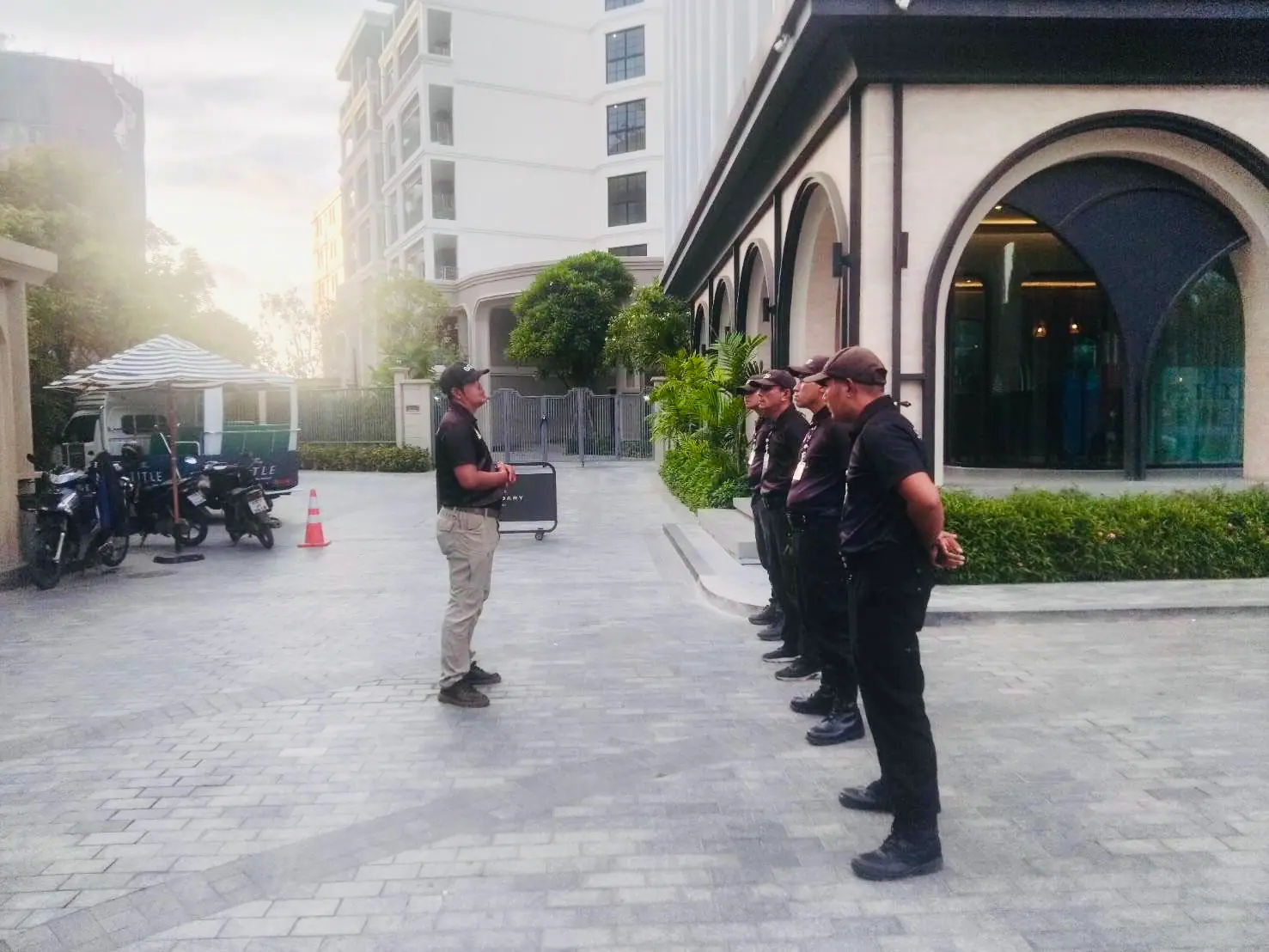
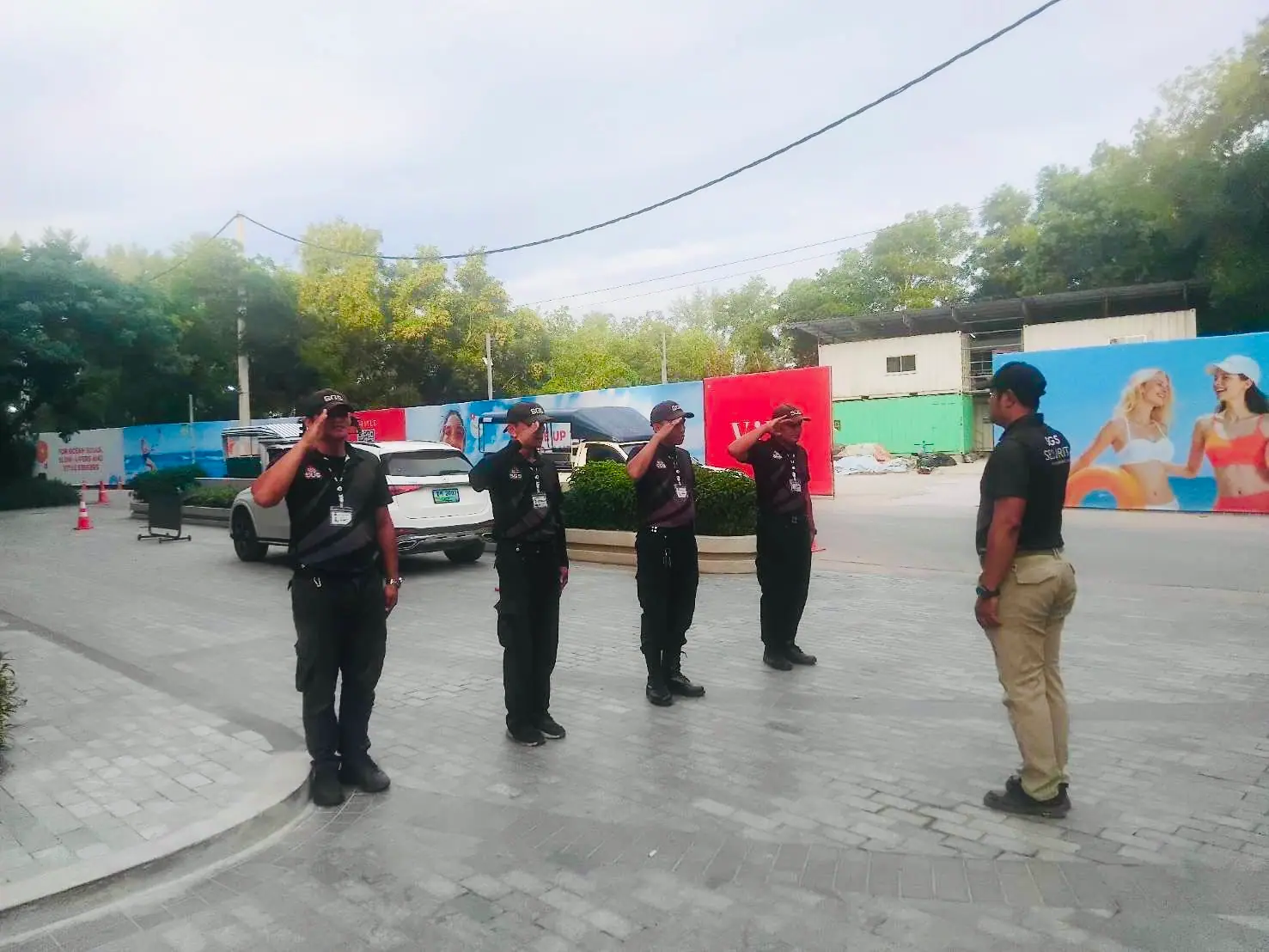
Every SGS officer arrives licensed. The licence course — run at the SGS school in Thalang under the Department of Skill Development — covers the law, first aid, fire response and the basics of guarding. What it cannot cover is the property itself: the layout of a resort’s back of house, which entrance at a new development is for residents and which for contractors, where the assembly point is and who leads guests to it. So SGS supervisors take the training to the site. These photographs are from two such sessions: a dawn muster on the back-of-house loading apron at InterContinental Phuket Resort in Kamala, and a series of gatehouse drills at The Title Legendary, a new condominium development in Bangtao.
Both sessions were run by supervisors from the SGS security training school in Phuket — the same DSD-accredited instructor team behind the licensing course for new officers, the refresher cycle for serving officers, and on-site programmes built around a client’s own property.
Why the classroom is where guard training starts, not where it ends
A hotel’s risk lives in the back of house
Guests see the lobby. Theft, unlogged contractor access and fire risk sit behind it — in the loading bay, the staff entrance and the plant rooms. An officer who has only seen the property on a plan does not know which door matters at 03:00. The InterContinental session was run where those doors are.
A new development changes every week
At The Title Legendary the completed buildings, the sales gallery and a live construction interface share one entrance. Residents, contractors and delivery drivers arrive through the same gate, and the rules for each are different. Post orders written last month are already out of date unless the team is walked through the changes on the ground.
A briefing becomes behaviour only through drill
Telling an officer the standard is not the same as having them show it. Dressing the line, turnout, the salute, reporting to a supervisor and reading back post orders are repeated on site until they are automatic — because the officer who does the small things correctly at 06:49 is the one who does the large things correctly when it counts.
Muster, inspection and post orders — on the ground they apply to
Dressing the line before a word is said
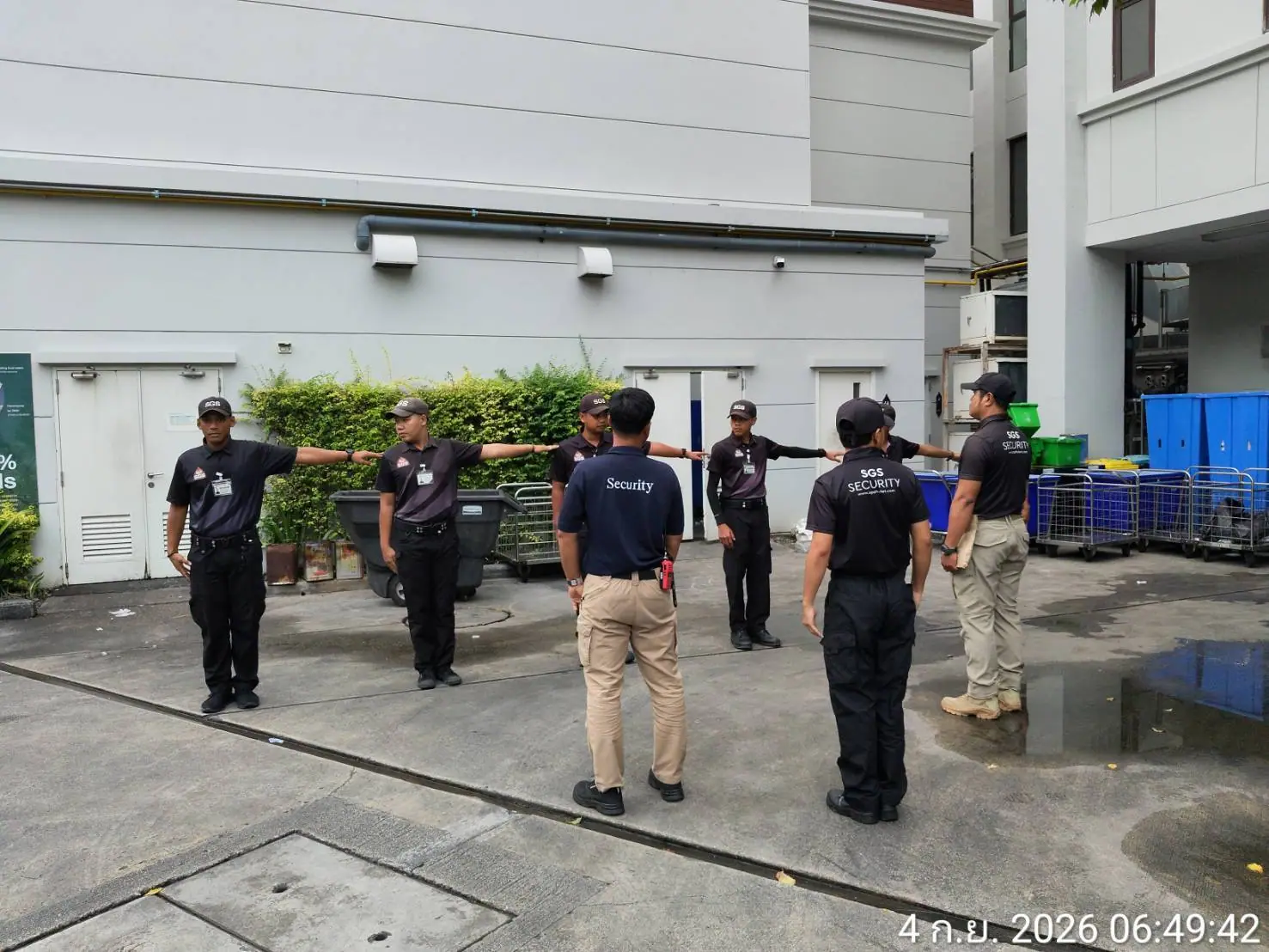
Each session opens the same way: the team falls in, dresses by the right at arm’s length and stands to attention. It looks ceremonial. It is not. A line that forms quickly and straight tells the supervisor the team is switched on, and it puts every officer where they can be seen, counted and inspected before the property is handed to them.
Uniform, ID and equipment checked by two supervisors
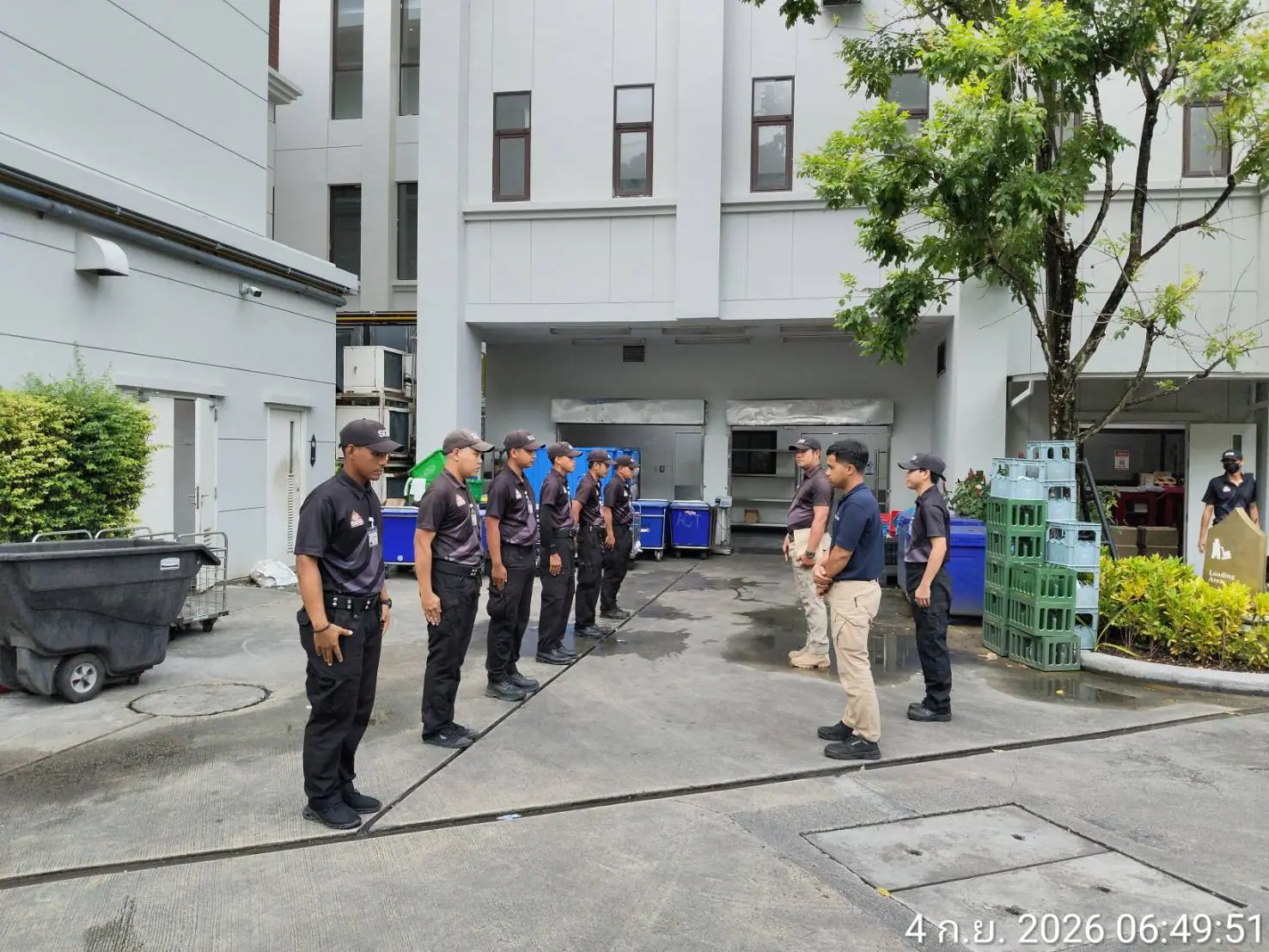
At the InterContinental two SGS supervisors walked the line together — cap, shirt, boots, belt, the SGS ID card on the chest — and corrected each officer on the spot. On a hotel property the officer is part of what the guest sees; on a back-of-house door the visible ID is what tells a contractor they are dealing with someone who will log their entry.
Post orders briefed and read back at the post itself
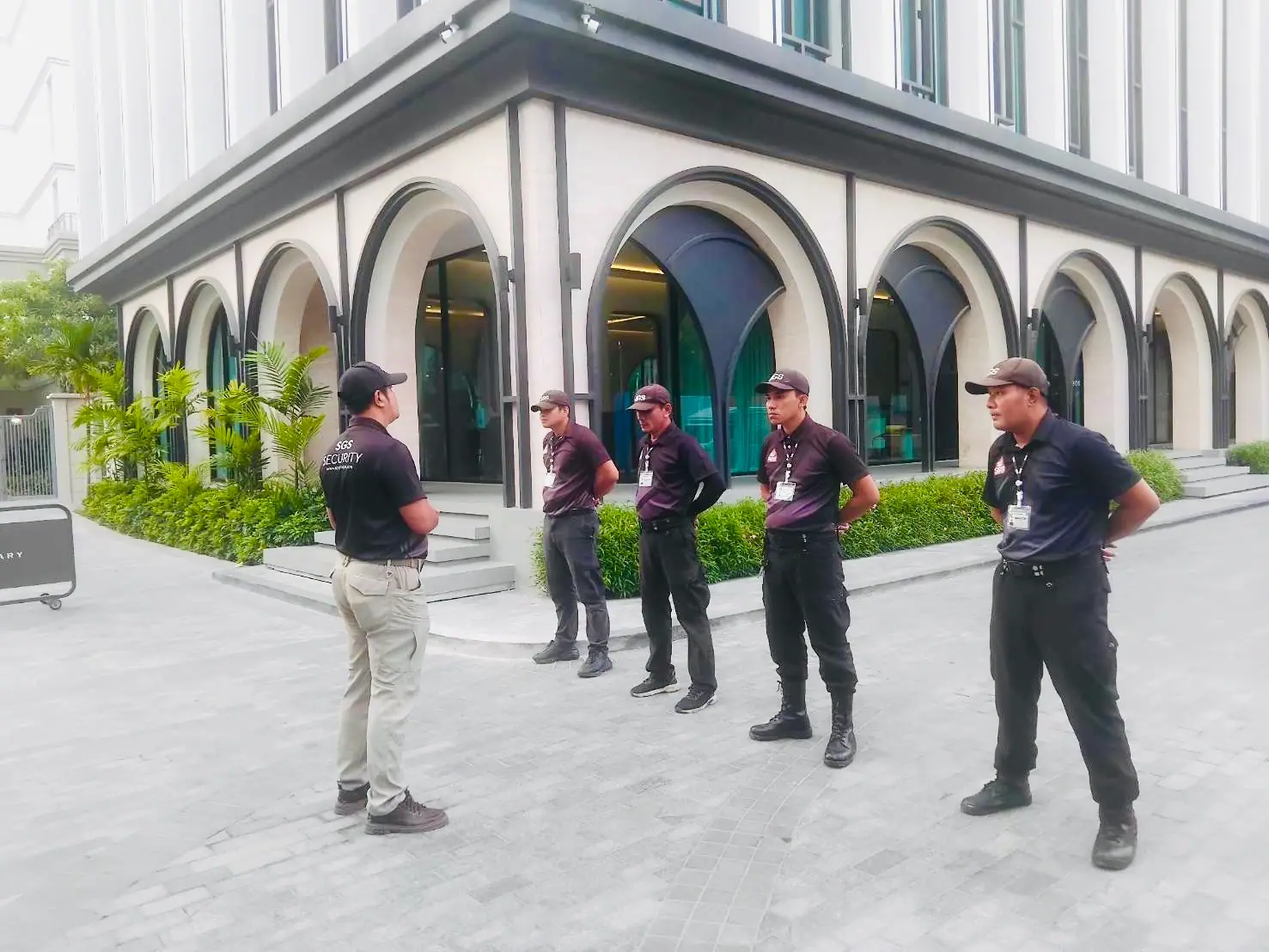
Post orders are not handed out in a room. The supervisor briefs them where they apply — on the loading apron beside the assembly point sign at the InterContinental, and in front of the entrance arcade at The Title Legendary — and officers read back what they will do: who is allowed through, what is logged, where the assembly point is and who leads people to it.
Two very different properties, one SGS standard
A beachfront resort with an established back of house and a condominium development still partly under construction need different post orders and the same discipline. Running both to the same drill means an officer moved between sites for a shift arrives with the same habits, the same terminology and the same reporting line as the team already there.
- InterContinental Phuket Resort, Kamala Dawn muster, turnout inspection and post-order briefing on the back-of-house loading apron, beside the resort assembly point.
- The Title Legendary, Bangtao Gatehouse and entrance drills at a new condominium development where completed buildings, a live construction interface and one shared entrance meet.
What every officer had to demonstrate on site
A licence proves the officer may guard. The on-site drill proves they can guard this property. Every officer in these photographs worked through the sequence under a supervisor and was corrected where it was wrong — until it was right, not until it was over.
- Dressing by the right — arm’s-length spacing, line straight, before a word is spoken
- Turnout — uniform, cap, boots, and the ID card visible on the chest
- Attention, at ease and the salute — reporting to a supervisor and to the client’s manager
- Post orders read back — the officer repeats the post’s orders, not just hears them
- Assembly point, fire exits and the route the officer leads guests along
- Back-of-house access — who is allowed through a loading bay and how deliveries are logged
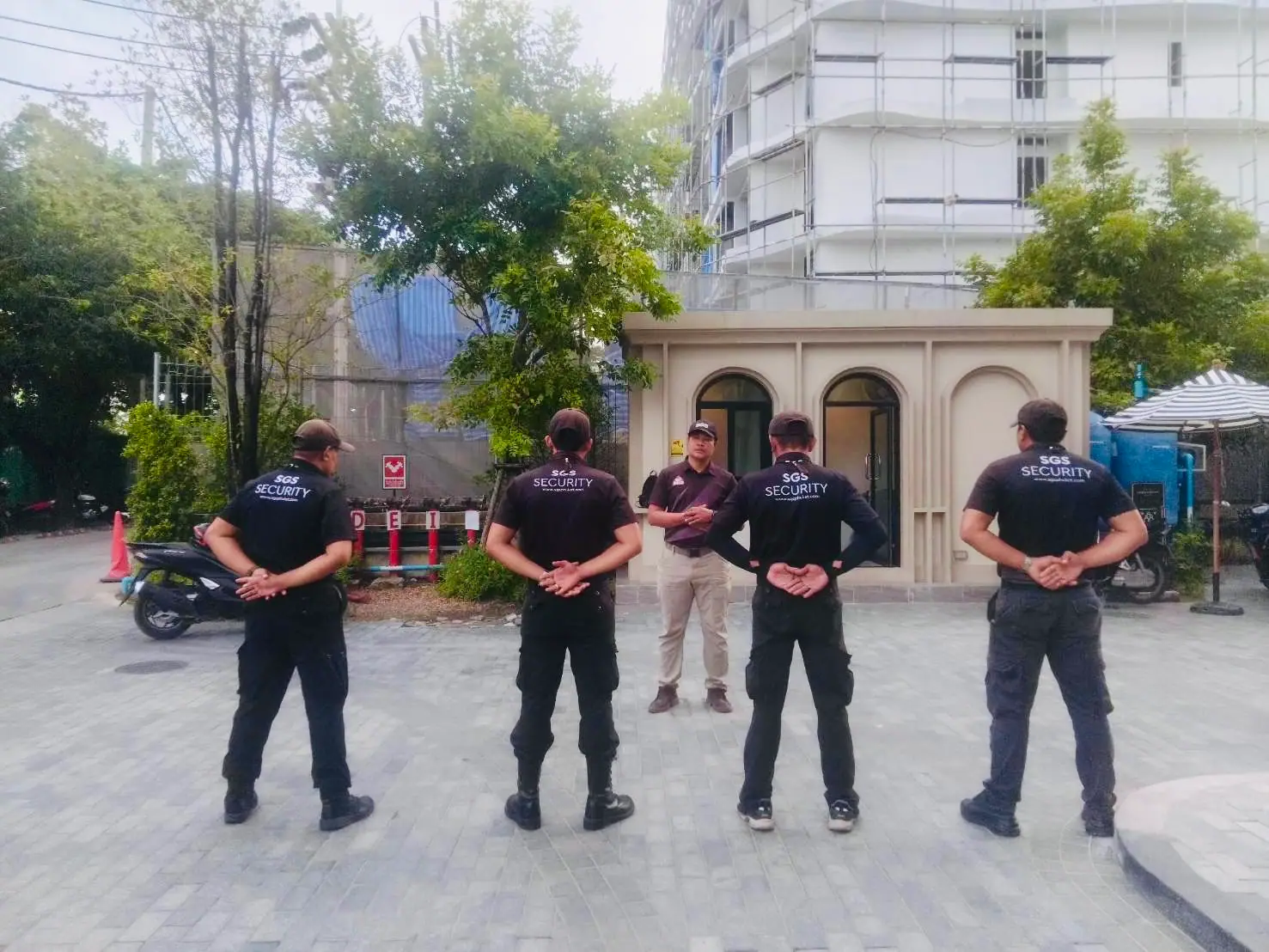
- Gatehouse procedure at a development where contractors and residents share one entrance
- Handover — what the incoming officer is told and what is written in the occurrence book
The Title Legendary, Bangtao — gatehouse, arcade and hoarding
On-site security guard training in Phuket — FAQs
Are SGS security guards trained at the property, or only at the training school?
Both. Every officer completes the licensing course at the SGS school in Thalang before a first shift. They are then trained on site by SGS supervisors — muster, turnout inspection, post orders and drills run on the property they will guard, as in the sessions at InterContinental Phuket Resort in Kamala and The Title Legendary in Bangtao.
What does on-site security training at a hotel cover?
The property itself: back-of-house and loading-bay access, contractor and delivery control, the assembly point and the officer’s role in a fire evacuation, guest-facing conduct, reporting lines and handover. It is run by an SGS supervisor on the ground, with post orders briefed and read back at the post they apply to.
Why do security guards line up and salute before a shift?
The muster puts every officer where they can be counted, inspected and briefed before the property is handed to them, and it is the fastest way for a supervisor to see whether the team is ready. The salute and reporting drill sets the standard of conduct the client and the guests will see for the rest of the shift.
Is SGS security training accredited in Thailand?
Yes. SGS operates a Department of Skill Development (DSD) accredited training school under the Thai Ministry of Labour, and its licensing course is the recognised qualification route under the Security Business Act B.E. 2558 (2015). On-site sessions are run by the same senior in-house instructors and supervisors.
Does SGS provide security for hotels in Kamala and condominiums in Bangtao?
Yes. SGS guards hotels, resorts, residential developments and villa estates along the west coast of Phuket, including Kamala, Bangtao, Surin and Cherngtalay, from its headquarters in Thalang. Every post runs under written post orders with a 24/7 operations centre behind it.
How do we arrange guarding for a hotel or a new development in Phuket?
Tell us the property, the number of entrances and posts, and whether the site is operating, under construction or both. A senior SGS consultant will survey the site and respond within one business day with a post plan, a training outline and an indicative quote.
Talk to SGS about hotel and development security
Whether it is an operating resort, a condominium still handing over from the contractor, or both on one site, SGS plans posts, post orders and on-site training around how the property is actually used. Tell us the details and a senior consultant will respond within one business day.